Digital Waste Tracking Software Providers UK: How to Choose from the GOV.UK List
Ready to Streamline Your WEEE Management?
See how WEEE Manager can help your business stay compliant and efficient.
DEFRA publishes a list of software that can connect to the Digital Waste Tracking Service (DWTS). Choosing from that list is not the same as picking a weighbridge brand or an accounts package. The wrong shortlist wastes months — and for receiving sites in England and Wales, Report Receipt of Waste has been mandatory since 1 October 2026.
This is an honest guide to evaluating digital waste tracking software providers in the UK: what the GOV.UK list actually means, how to match products to your operation, and where WEEE Manager sits without invented competitor scorecards.
Confirm the current list and rules on the GOV.UK digital waste tracking service page.
What “listed on GOV.UK” means — and what it does not
Compatible software has been assessed as able to submit (or support submission of) the data DEFRA’s service expects for the relevant use case — for Phase 1, that is reporting receipt of waste. Listing is not a quality rating, a price comparison, or a guarantee that the product fits scrap yards, WEEE ATFs and national carrier fleets equally well.
Ask every provider:
- Are you listed for the use case we need (receipt of waste now; collection later)?
- Do we register with DWTS ourselves, pay the £26 government fee, and share an API code with you?
- How do you handle the two-working-day update window in day-to-day gate work?
Start with your PAT scenario, not the product brochure
Most shortlists fail because the buyer describes “waste software” when they mean one of three different jobs.
1. Receiving site (Phase 1 — live in England/Wales)
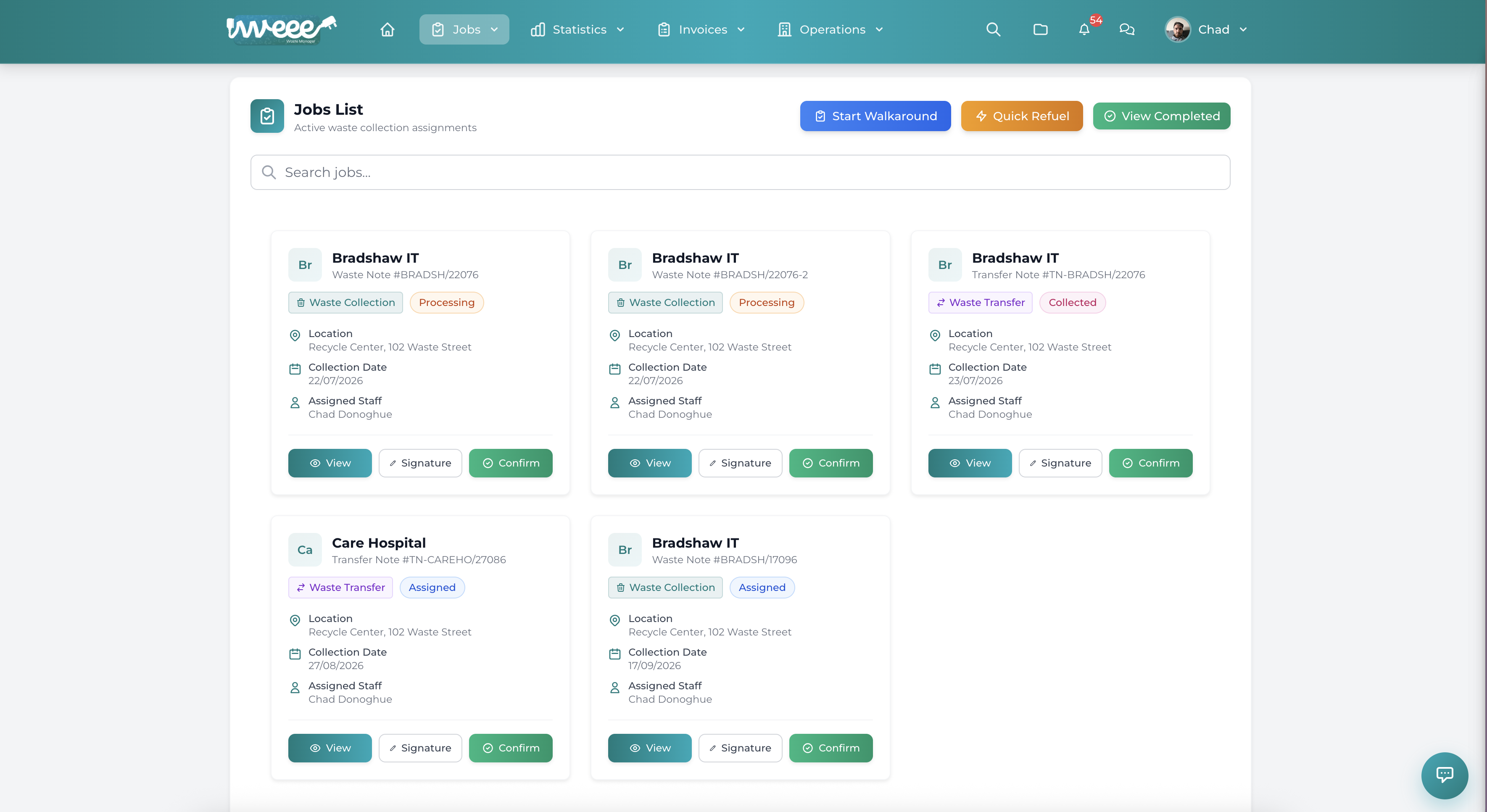
You hold a permit or licence to take waste in. You must report each inbound load. Priorities: gate / weighbridge capture, EWC and quantity accuracy, carrier details, and API submission without retyping. See waste receiving site software and DEFRA digital waste tracking software.
2. Carrier / collector (Phase 2 — planned October 2027)
You haul waste. You are not yet the Phase 1 reporting party, but every tip site you use already needs structured digital details. Priorities: job cards, digital WTNs, offline capture, and clean handoff of fields the receiver will submit. Carriers should still shortlist providers who understand both phases.
3. Mixed group
You run sites and vehicles. Prefer one system of record so the same EWC, weight and carrier registration do not diverge between the yard and the cab.
If you are unclear which phase you are in, read the DWTS compliance checklist first.
Receiving-site scope versus carrier scope
Phase 1 software must make inbound reporting reliable. Phase 2 will pull collectors onto the service. Buying only a “portal helper” that uploads a weekly spreadsheet may get a small site through a short bridge period; it will not scale when the temporary spreadsheet route is withdrawn (expected after October 2027).
Questions that separate products:
- Does the note created at the gate become the DWTS payload, or is there a second typing desk?
- Can drivers or weighbridge staff capture incomplete loads and block submission until required fields are complete?
- How are hazardous flags and mirror EWC entries handled? (Guide: EWC codes UK.)
Pricing transparency
Budget two lines separately:
- DEFRA: £26 a year per legal entity that creates or edits DWTS records
- Software: the vendor’s subscription or licence
Many UK waste vendors still hide behind “request a quote”. That makes like-for-like comparison slow. WEEE Manager publishes hosted pricing from £120 a month (by user count; same core features on hosted plans). Full table: pricing.
When you compare providers, ask what is included: unlimited notes, API connection, mobile / offline use, support, and whether DWT submission is an add-on.
Spreadsheet upload versus API
DEFRA allows a temporary spreadsheet upload for operators without software. It is a government format, not “our XLSX on the server”. The API route is the intended long-term path: register, obtain credentials, share them with a listed provider, submit from operational software.
Use the spreadsheet only as a bridge. If your volume is more than a handful of loads a day, API-backed software is the safer default. Overview: digital waste tracking.
A practical shortlist process
- Confirm Phase 1 vs Phase 2 for each legal entity and site
- Check GOV.UK listing for your use case
- Ask how API code sharing and the two-working-day clock work in their product
- Insist on published or written pricing and what “go live” includes
- Run a week of real inbound loads in a trial or pilot before you sign a long contract
Where WEEE Manager fits
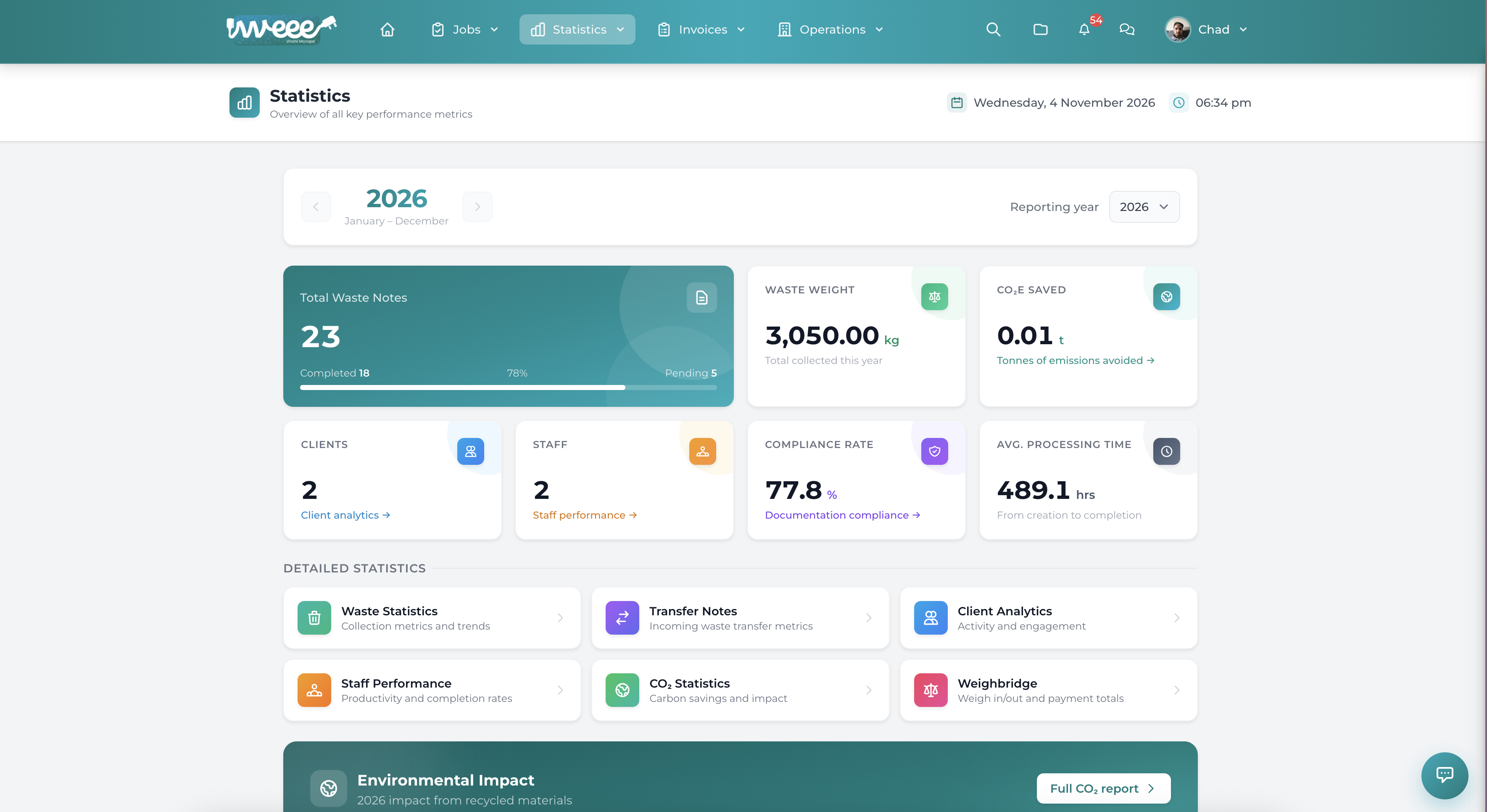
WEEE Manager is GOV.UK-listed waste and WEEE software for UK operators. It is built around structured notes, EWC codes, carrier and site details, and DWT-ready fields so receiving sites can submit via API once credentials are shared. It is not the only listed product — compare it against your PAT scenario, volume and whether you also need WEEE / ATF workflows.
Start with digital waste tracking, DEFRA DWT software, pricing, or register.
Transform Your Waste Management Today
Join hundreds of businesses using our platform to simplify WEEE compliance, reduce costs, and save time.
No credit card required • Free consultation • Quick setup
Frequently Asked Questions
Tags
Start Your Digital Waste Tracking Journey
Get started with professional waste management software. Request a demo or schedule a callback to learn more.